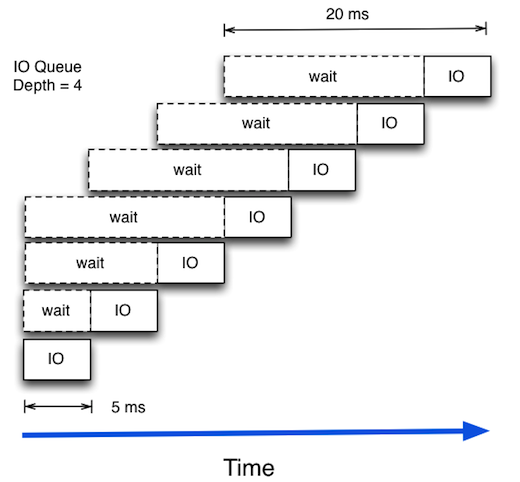
How is that possible? How can a disk drive suddenly do more random
IOPs at the cost of latency? The trick lies in that the storage
subsystem can be smart and look at the queue and then order the I/Os
in such a way that the actual access pattern to disk will be more
serialised. So a disk can serve more IOPS/s at the cost of an increase
in average latency. Depending on the achieved latency and the
performance requirements of the application layer, this can be
acceptable or not.
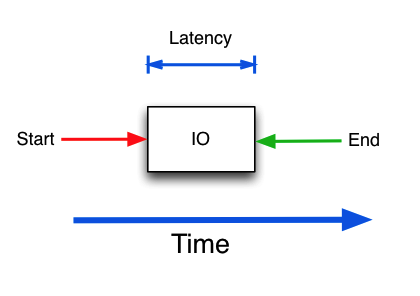
Latency is how fast a single I/O-request is handled.
A storage subsystem that can handle 1000 IOPS with an average latency
of 10ms may get better application performance than a subsystem that
can handle 5000 IOPS with an average latency of 50ms. Especially if
the application is sensitive to latency, such as a database service.

 和延迟确认一样,Nagle 也没有直接提高性能,启用它的作用只是提高传输效率,减轻网络负担。在某些场合,比如和延迟确认一起使用时甚至会降低性能。
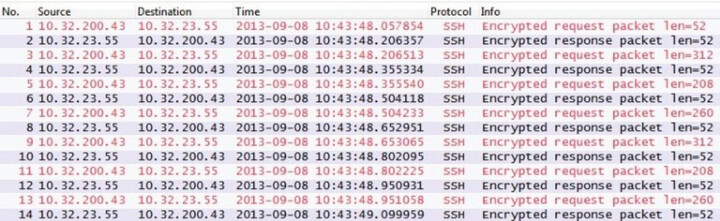
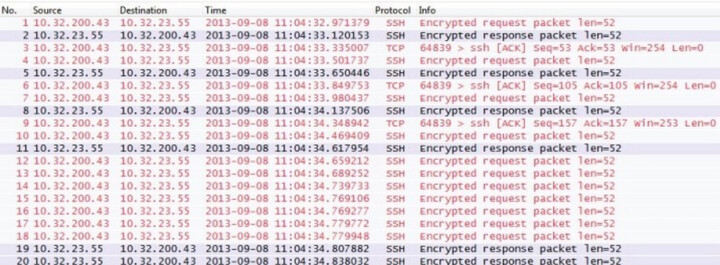 前3个包的解说如下。客户端:“我想给你发个加密后的字符‘j’。”服务器:“我收到字符‘j’了,你可以把它显示出来。”客户端:“知道了。”接下来的4、5、6号包,以及7、8、9号包也是一样的情况我的客户端10.32.200.43放在上海,而服务器10.32.23.55位于悉尼,它们之间的往返时间大概是150毫秒。由于这些包是在客户端收集的,所以1号包和2号包相差150毫秒是正常现象。奇怪的是客户端收到2号包之后,竟然等待了大约200
毫秒才发出3号包。本来是1毫秒之内可以完成的事,为什么要等这么久呢?再看看5号和6号之间,以及8号和9号之间,也是大概相差200毫秒。
前3个包的解说如下。客户端:“我想给你发个加密后的字符‘j’。”服务器:“我收到字符‘j’了,你可以把它显示出来。”客户端:“知道了。”接下来的4、5、6号包,以及7、8、9号包也是一样的情况我的客户端10.32.200.43放在上海,而服务器10.32.23.55位于悉尼,它们之间的往返时间大概是150毫秒。由于这些包是在客户端收集的,所以1号包和2号包相差150毫秒是正常现象。奇怪的是客户端收到2号包之后,竟然等待了大约200
毫秒才发出3号包。本来是1毫秒之内可以完成的事,为什么要等这么久呢?再看看5号和6号之间,以及8号和9号之间,也是大概相差200毫秒。
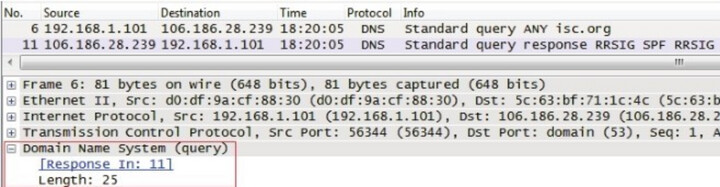 而11号包收到的回复却能达到3111字节(见下图底部的Length 3111),竟然放大了124倍。
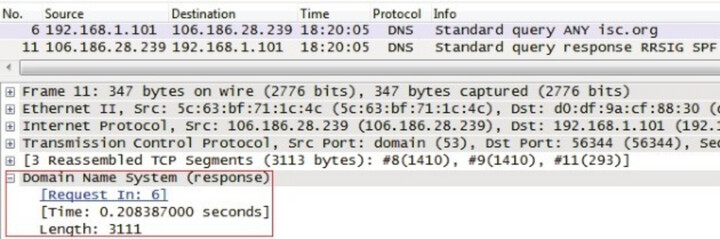 假如在 6 号包里伪造一个想要攻击的源地址,那该地址就会莫名收到 DNS服务器3111字节的回复。利用这个放大效应,黑客只要控制少量电脑就能把一个大网站拖垮了。