
Content #
The ratio between probabilities in different groups is called risk ratio, where risk refers to the risk of having the effect. risk = group rate / global rate
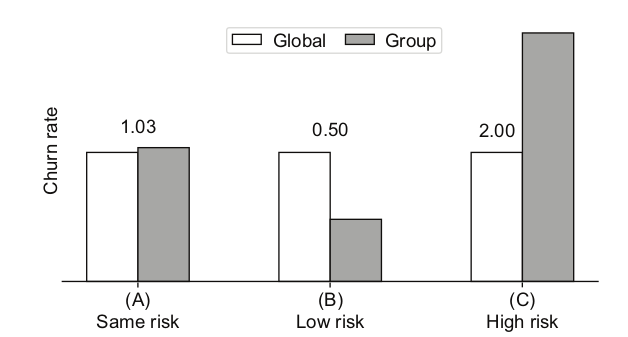
If the risk is lower than 1, the group has lower risks: the churn rate in this group is smaller than the global churn. If the value is higher than 1, the group is risky: there’s more churn in the group than in the population.
The term risk originally comes from controlled trials, in which one group of patients is given a treatment(a medicine) and the other group isn’t (only a placebo). Then we compare how effective the medicine is by calculating the rate of negative outcomes in each group and then calculating the ratio between the rates:
risk = negative outcome rate in group 1 / negative outcome rate in group 2